

From Enrollment to Engagement: Crafting a School Culture That Retains All
Retention is rarely about one class, one coach, or one belt, it is about whether people feel they belong here.
Enrollment is a moment. Retention is a relationship. When we talk about building a school culture that retains students and staff, we are talking about what happens after the first click on the website, after the first trial class, and especially after the early excitement fades into real life.
In your area and the surrounding your area area, families juggle school calendars, commuting, sports seasons, and sibling schedules. Adults juggle work travel, stress, and inconsistent weeks. If our culture depends on perfect attendance and constant motivation, we will lose good people for predictable reasons.
We approach retention as something we can design on purpose. That means our martial arts school culture is not a vibe you hope for. It is a set of repeatable behaviors: how we welcome, how we coach, how we communicate, and how we support instructors so the student experience stays consistent.
Why enrollment is not retention
A full school looks successful. A school that keeps students and staff is stable. Those are not always the same thing.
Enrollment is driven by interest and urgency. Retention is driven by belonging, progress, and trust. A student can love the first class and still disappear in week three if nobody learns a name, nobody notices a missed class, and progress feels invisible. The same is true for staff. An instructor can be excited on day one and burned out by day thirty if expectations are unclear and the schedule is chaotic.
When we focus on building a school culture that retains students and staff, we stop treating cancellations as a mystery. Instead, we treat retention as a journey with checkpoints we can track and improve.
What makes people stay when life gets busy
Most people do not leave because they suddenly dislike martial arts. People leave because the program stops fitting their life, or because the social and emotional benefits never take root.
In our experience, belonging is a retention mechanism. Students stay longer when our instructors know names quickly, when classmates feel welcoming, and when the room feels safe for beginners who are nervous or self-conscious. A strong martial arts school community carries students through plateaus, injuries, family travel, and stressful school weeks.
Progress also needs to be visible. Belt promotions matter, but they are not the only measure of growth. If the only recognition a student receives is a belt every few months, motivation will dip in between. We keep engagement up by noticing effort, consistency, leadership, and personal wins that happen before the next rank.
The first 90 days: where culture becomes real
The first 90 days decide more than most owners want to admit. A new student is silently asking three questions: Do I feel safe here? Do I feel seen here? Can I imagine myself doing this for a year?
We treat the first 90 days as a guided onboarding, not a casual drop in. This is one of the most practical ways to support building a school culture that retains students and staff, because it creates structure for students and predictability for instructors.
A simple first 90 days framework we use
- First contact and scheduling: We respond quickly, confirm what to expect, and make it easy to find the class schedule on the website.
- First class welcome: We introduce the student to the space, explain etiquette without making it intimidating, and help the student feel oriented fast.
- Week one connection: We learn names, pair beginners with supportive partners, and check in after class to answer small questions before they become big doubts.
- Day 30 goals: We set a realistic short-term target such as attendance consistency, a basic skill set, or comfort with class flow.
- Day 60 progress snapshot: We share what is improving and what to focus on next, so progress feels concrete.
- Day 90 retention check: We notice attendance patterns, ask what is getting in the way, and adjust plan and schedule expectations.
This kind of structure can feel almost too simple, but it works because it turns the early weeks into a relationship-building system. It also prevents the quiet churn that happens when a student drifts away without anyone noticing.
Building an inclusive mat culture without cliques
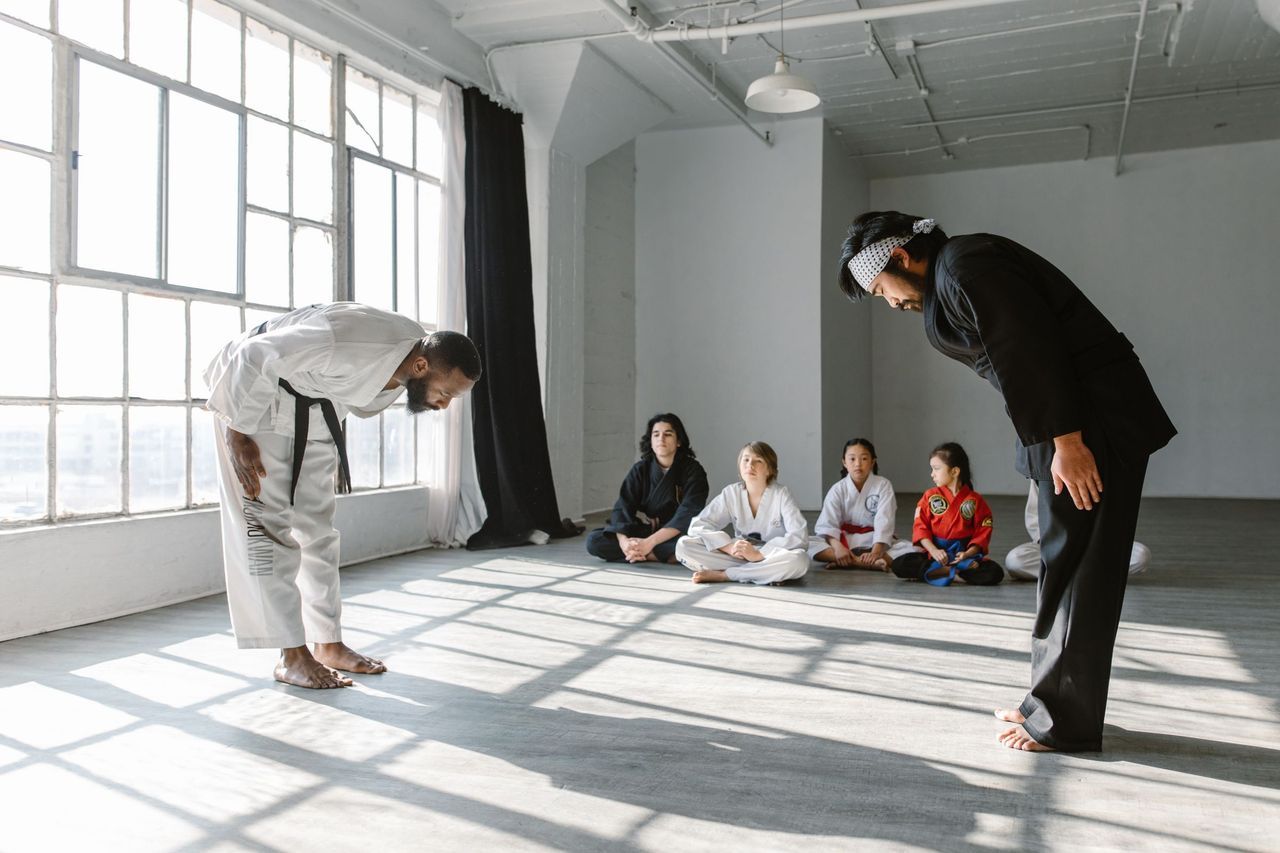
A martial arts school culture should feel like a community, not a social club with a locked door. We want confident students, but we do not want a room where only the loudest personalities feel comfortable. Inclusion has to be intentional.
We start by setting clear norms. Respect is not just bowing or saying yes sir or yes ma am. Respect is how we correct students, how we handle teasing, how we pair partners, and how we respond when somebody feels overwhelmed. We keep standards consistent so students know what is acceptable and what is not.
We also coach peer behavior, not just technique. When advanced students learn to help beginners without overpowering them, the whole room feels safer. That is how a martial arts school community becomes self-reinforcing instead of instructor-dependent.
In your area, we also pay attention to the mix of ages and needs. A room might include a shy child, a competitive teen, a working parent, and an adult beginner who has not exercised in years. Building a school culture that retains students and staff means making sure the quiet student gets the same welcome as the outgoing one, and the beginner gets the same respect as the black belt.
Staff retention is student retention
Students may not be able to name every factor that makes a school feel stable, but everyone can sense instructor turnover. When instructors rotate constantly, relationships break. Teaching styles shift. Parents lose confidence. The experience becomes inconsistent even if the curriculum is strong.
We treat our staff experience as part of culture design. Instructors need more than techniques. Instructors need clarity, support, and a path to grow.
That starts with onboarding that explains standards for safety, communication, class flow, and feedback. It continues with mentoring, regular check-ins, and predictable scheduling. When instructors feel supported, students feel the difference in the first five minutes of class: calmer transitions, better attention, and more consistent energy.
Burnout prevention matters, too. If one instructor carries every class, every private lesson, and every front-desk conversation, retention will eventually suffer on both sides. We build systems so the workload is sustainable and the student experience stays warm and attentive.
Recognition beyond belts: keeping motivation alive
Belts are meaningful, but they are not a full retention plan. We use multiple forms of recognition because students grow in different ways.
A student might improve coordination, show courage by speaking up, or keep training during a difficult school semester. If we only celebrate rank, we miss the moments that actually build identity: I am the kind of person who shows up.
Here are a few recognition channels we build into our culture:
- Attendance consistency recognition that rewards showing up, not being naturally talented
- Effort-based shout-outs when a student persists through a hard skill or tough week
- Leadership recognition for helping newer students feel welcome and safe
- Character recognition for calmness, self-control, and respectful partner work
- Personal progress notes that highlight specific improvements a student can feel in class
This is a practical part of building a school culture that retains students and staff. Students stay when growth feels visible and personal, and instructors stay when the culture gives them tools to encourage people without relying on hype.
Advanced pathways that prevent stagnation
Many students leave at the same predictable moment: after the beginner phase. Early training has constant novelty. Later training requires patience. If we do not provide new reasons to engage, students interpret the plateau as a sign that progress is over.
We prevent stagnation by creating pathways. Leadership teams, junior-instructor tracks, black-belt journeys, seminars, mentoring roles, and service activities give experienced students a new identity inside the program. The key is to make these pathways feel earned and supportive, not exclusive.
Advanced pathways also strengthen our martial arts school community. Beginners see a future version of themselves, and advanced students gain purpose by contributing. That makes the room feel alive even when individual motivation dips.
Communication that prevents silent churn
Most cancellations do not start with an email that says I am quitting. Most cancellations start with missed classes. Then two missed classes. Then a month goes by and it feels awkward to return.
We treat communication as a culture tool, not just an operations task. When someone misses class, we check in. Not to pressure, but to signal that absence is noticed and that returning is normal.
We also keep progress visible. Short progress reviews, milestone check-ins, and quick notes to parents about what a child is improving can make a huge difference in perceived value. Adults appreciate this too. A simple message like your balance has improved a lot in the last few weeks can carry someone through a busy season.
This is one of the most overlooked parts of building a school culture that retains students and staff: the culture is not only what happens on the mat. It is also how we maintain connection between classes.
Measuring culture like a real business asset
Culture can feel abstract until we measure it. We like retention dashboards because they turn feelings into signals we can act on.
We track the journey from inquiry to trial, trial to membership, and membership into the first 90 days. We watch attendance patterns and milestone progression. We monitor freezes, cancellations, and reactivations. We also listen: short surveys, parent feedback, and staff pulse checks help us catch issues before they become exits.
This matters locally, too. local enrollment shifts year to year across school districts, and families make decisions based on schedule pressure and perceived fit. When we track our own retention journey, we do not rely on assumptions about what families will do. We respond to what our data and our conversations tell us.
Let the follow-up run without you
Every idea above only pays off when someone answers the lead the moment it comes in and keeps following up until the trial is booked. That is the job More Students Less Work does for you: an AI front desk that replies by text and email from your own answers, follow-up that keeps going, and trial bookings that land on your calendar. Meta ads or a template website are available as options. It is a Ground Standard product, led by Michael Spyrou, for school owners who want the sales system handled without running it themselves.
Book your setup call with Michael and bring your current offer and class schedule. Schools that want everything handled by one agency team go through Ground Standard Agency.
Related reading
- The Secret to Building a School Culture That Keeps Students and Staff Engaged
- 7 Essential Steps to Build a School Culture That Retains Talent
- Unlocking the Keys to Long-Term Student and Staff Retention in Schools
- Service: Martial arts school metrics
- All Retention articles
- Ground Standard Agency, for schools that want the full service: How to Create a School Culture Where Students and Staff Thrive
- Source: the U.S. Small Business Administration on hiring and managing employees
More Students Less Work is a Ground Standard product. When a school wants the full agency behind it, Ground Standard Agency is the next step.
Part of the topic Martial Arts School Metrics.



Start your 30‑day free trial.
Experience what the Core Package of the Packed Mats System can do for your school, set up for you.
- The signature automated AI sales system
- Set up and integration
- Access to the platform
- Onboarding and training videos
- Six-month agreement, no hidden fees