

The Secret to Building a School Culture That Keeps Students and Staff Engaged
The schools that keep people longest are rarely the loudest, they are the most consistent.
When people talk about retention, the conversation usually drifts toward marketing, pricing, or a new piece of equipment. In our work, we see something more basic driving the numbers: Building a school culture that retains students and staff is mostly about what people repeatedly experience the moment they walk in, class after class, week after week.
Culture is not your wall decor or your mission statement. Culture is whether a new student gets greeted by name, whether progress feels real before the first belt, whether families feel informed, and whether instructors feel supported enough to teach with energy instead of exhaustion. That matters in every school, but it shows up especially fast in martial arts school culture, where consistency is the product.
In your area, relationships travel quickly. Families talk, staff networks overlap, and students have plenty of activity options. So if we want martial arts school student retention to be steady, we have to treat culture like a system we build on purpose, not a vibe we hope appears.
Define school culture beyond slogans
A practical definition we use is simple: our culture is the set of behaviors we allow, repeat, reward, and measure. That includes how we teach, how we handle conflict, how we communicate policies, and how we recognize effort.
Research connects positive school culture with stronger achievement, improved behavior, attendance, and student engagement. Even when that overall picture looks decent, retention is not automatic. In a spring 2025 Horace Mann educator survey, school culture averaged 7.0 out of 10, yet 58 percent of educators said we were considering leaving the profession within three years. The takeaway is uncomfortable but useful: a friendly atmosphere does not guarantee that people stay. Sustainable culture needs structure, support, and follow-through.
That applies to martial arts schools, too. Students leave when training becomes confusing, when progress feels invisible, or when nobody notices absence until the cancellation email arrives. Instructors leave when expectations shift weekly, schedules feel chaotic, or parent issues are dumped on the nearest person in a uniform.
Why retention is a culture issue, not a motivation issue
We like motivation. Motivation helps. But motivation is unreliable, especially for kids, busy parents, and instructors teaching back-to-back classes. Culture is what keeps people showing up when motivation dips.
Building a school culture that retains students and staff means we design for the predictable drop-off points:
- The first 30 days, when a student is still deciding whether we are safe, welcoming, and organized
- The 60 to 90 day window, when novelty fades and habit either forms or collapses
- The first plateau, when skills improve but it does not feel dramatic yet
- The first conflict, a schedule issue, a discipline moment, a misunderstanding with a parent
- Instructor fatigue, when great teachers stop enjoying teaching and start merely getting through it
Martial arts retention guidance consistently emphasizes community as a core reason students continue. People stay when relationships form, not when attendance feels like an isolated workout. That is culture in plain language: belonging plus progress plus trust.
Build retention into the first 90 days
The first 90 days are not just onboarding. They are your culture in concentrated form. If we do this period well, we reduce cancellations, increase attendance consistency, and create more referrals without begging for them.
A structured welcome that removes uncertainty
New students and parents should not have to guess what happens next. We aim to make the early experience feel clear and human: where to stand, what to wear, how to line up, who to ask for help, and what success looks like in week one.
A simple system that supports building a school culture that retains students and staff is a repeatable welcome routine. Not a long speech, just a consistent rhythm that tells students, you belong here, and tells parents, we are paying attention.
Early wins that are not just belt related
Belts matter, but waiting for belt time to celebrate is a slow way to build confidence. We build early wins into training so students feel momentum right away. For kids, that might mean earning recognition for attention and effort. For adults, it might be consistent attendance and a technique milestone that feels practical.
Here are progress markers we like because they are visible and meaningful:
- Technical milestones such as clean stance, basic combinations, or safe falling mechanics
- Focus and self-control improvements, like staying engaged for a full round
- Attendance streaks that show habit is forming
- Confidence markers, such as volunteering to demonstrate or trying a new partner
- Leadership behaviors like helping a newer student tie a belt or find the right spot
When progress is visible, martial arts school student retention stops depending on hype. It becomes a steady, earned commitment.
Belonging is not a poster, it is a daily practice
Students often quit when we unintentionally let them feel anonymous, intimidated, or out of place. Belonging is built in small moments: names, eye contact, pairing choices, and whether our systems make room for shy students, neurodivergent students, and students returning after a break.
For martial arts school culture, we focus on belonging mechanics:
Pairing and mentorship that prevents isolation
A buddy system does not have to be complicated. We can assign a consistent training partner for the first few classes, or rotate in a way that ensures nobody stands alone. The point is not forced friendship. The point is removing the social friction that keeps a student from walking back in.
Rituals that create shared identity
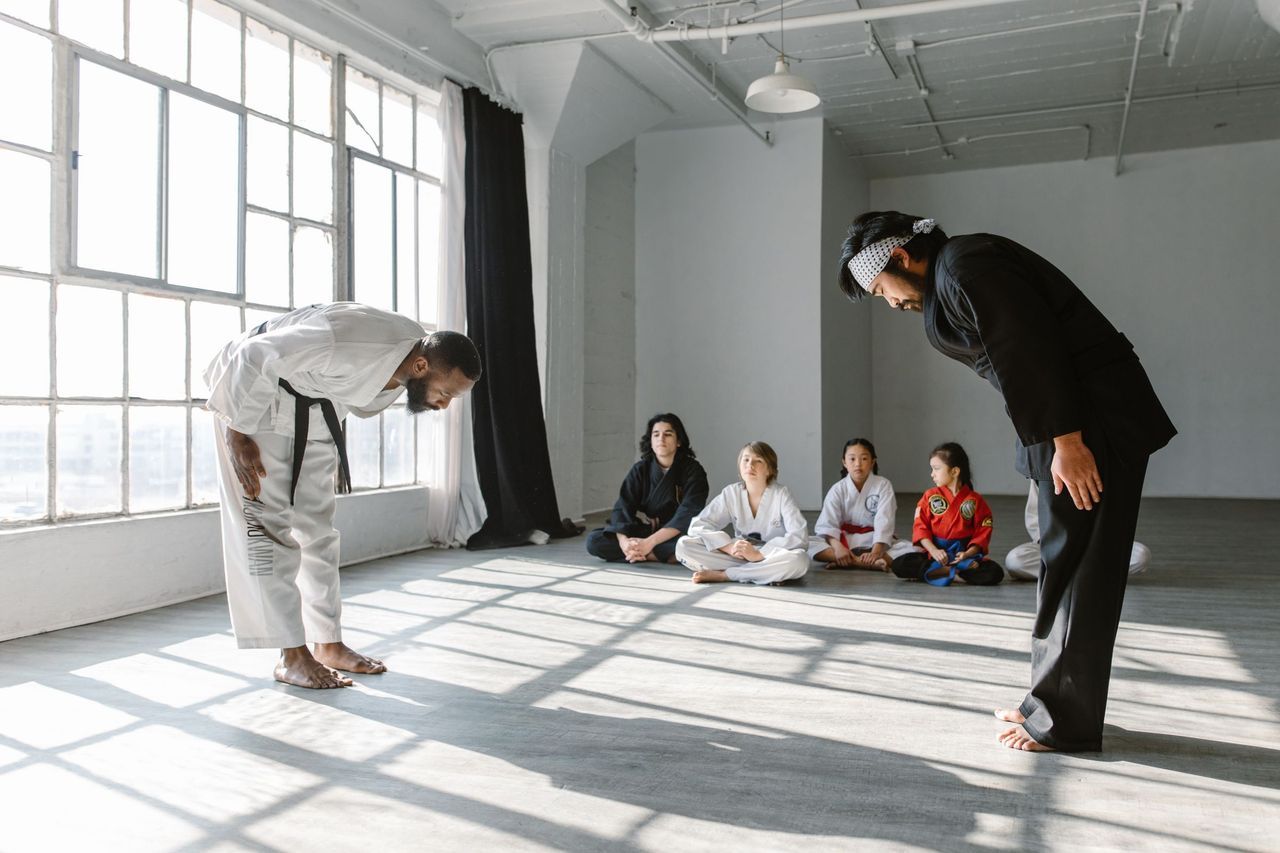
Opening and closing rituals are underrated. A consistent bow-in, a short value reminder, a respectful ending, and a moment of recognition create emotional bookends around the training. That predictability helps kids and adults alike.
Belonging is also how we improve instructor retention. When instructors feel part of a team, with shared standards and mutual support, teaching becomes less draining and more rewarding.
Staff retention depends on operational culture
The educator survey data is a reminder that even when collaboration and shared vision are strong, people still leave. In that same survey, 75 percent said staff worked collaboratively and 75 percent said staff shared common values and vision, and 69 percent reported active recognition of successes. Yet 58 percent still considered leaving. So we cannot confuse a positive vibe with a sustainable workplace.
Building a school culture that retains students and staff requires that we treat instructors as a core retention lever, not just as class coverage.
What keeps instructors from burning out
We focus on a few non-negotiables that make teaching sustainable:
- Clear teaching standards so instructors do not reinvent class every day
- Paid prep and training time so quality is not built on unpaid labor
- Consistent discipline procedures so instructors are not guessing in tough moments
- Regular check-ins that make feedback specific and actionable
- A path to grow, whether that is senior teaching roles, specialty programs, or leadership responsibilities
Instructor turnover breaks student trust. It also breaks the feeling of momentum, especially for kids who bond strongly with a consistent coach. If you want retention, protect the people who deliver the experience.
Families are part of the culture, whether we plan for it or not
In youth martial arts, parents shape attendance. If our communication is confusing, if policies feel hidden, or if billing is messy, families read that as a lack of professionalism, even if classes are great. We build culture with families by making the experience easy to understand and easy to navigate.
Communication that earns trust
We aim for communication that is clear, culturally respectful, and actually useful. local schools serve a notably diverse student population, and local data shows meaningful differences between student and teacher demographics. That is not a slogan opportunity. It is a reminder to communicate in a way that builds trust: plain language, respectful tone, representation in visuals and examples, and awareness that families do not all share the same assumptions about school systems.
For retention, we focus on:
- Regular progress updates that explain what a student is learning and why it matters
- Simple make-up policies and scheduling clarity on the class schedule page
- Fast, human responses when a parent raises a concern
- Transparent membership terms so families feel safe committing
When families feel informed, students attend more consistently. That is one of the quiet engines of martial arts school student retention.
Measure culture so you can improve it
Culture can feel subjective, but retention outcomes are measurable. Building a school culture that retains students and staff gets easier when we stop guessing and start tracking a few key signals.
One martial arts operator, Dave Kovar, cites a benchmark target of no more than a 3 percent monthly member quit rate. We treat that as a useful operating benchmark, not a universal industry standard, because every program mix and market is different. The bigger point is this: your cancellation rate should be visible, reviewed, and tied to action.
A simple monthly culture scorecard we use looks like this:
| Metric | What it reveals |
|---|---|
| 30-day retention | Whether onboarding creates early commitment |
| 90-day retention | Whether initial excitement becomes a habit |
| Monthly cancellation rate | Whether disengagement is increasing |
| Average attendance | Whether students are maintaining consistency |
| First milestone completion | Whether progress is visible early |
| Parent satisfaction | Whether the family experience supports renewal |
| Staff turnover and tenure | Whether internal culture is sustainable |
| Student referrals | Whether families feel confident recommending us |
When a metric dips, we do not shame the team. We investigate the system. Did absences go unfollowed? Did a class time change? Did a new instructor need more support? Culture is built through feedback loops.
Let the follow-up run without you
Every idea above only pays off when someone answers the lead the moment it comes in and keeps following up until the trial is booked. That is the job More Students Less Work does for you: an AI front desk that replies by text and email from your own answers, follow-up that keeps going, and trial bookings that land on your calendar. Meta ads or a template website are available as options. It is a Ground Standard product, led by Michael Spyrou, for school owners who want the sales system handled without running it themselves.
Book your setup call with Michael and bring your current offer and class schedule. Schools that want everything handled by one agency team go through Ground Standard Agency.
Related reading
- Start with the guide: From Enrollment to Engagement: Crafting a School Culture That Retains All
- 7 Essential Steps to Build a School Culture That Retains Talent
- Unlocking the Keys to Long-Term Student and Staff Retention in Schools
- 3 Key Metrics Every Martial Arts School Must Track
- All Retention articles
- Ground Standard Agency, for schools that want the full service: How to Create a School Culture Where Students and Staff Thrive
- Source: the U.S. Small Business Administration on hiring and managing employees
More Students Less Work is a Ground Standard product. When a school wants the full agency behind it, Ground Standard Agency is the next step.
Part of the topic Martial Arts School Metrics.



Start your 30‑day free trial.
Experience what the Core Package of the Packed Mats System can do for your school, set up for you.
- The signature automated AI sales system
- Set up and integration
- Access to the platform
- Onboarding and training videos
- No hidden fees