

Unlocking the Keys to Long-Term Student and Staff Retention in Schools
Retention is what happens when people feel progress, purpose, and belonging every time they walk through the doors.
In your area, families and educators have more demands on their schedules than ever, which is why building a school culture that retains students and staff has to be more than a nice idea. It has to show up in the small moments: how we welcome a new student, how we coach through a plateau, how we support an instructor after a long week, and how we communicate when someone misses class.
We approach retention as a designed experience, not a lucky outcome. When culture is clear and consistent, students stay because training becomes part of identity, not just an activity. Staff stay because work feels sustainable, respected, and connected to a mission that actually plays out on the mat.
In this guide, we’ll walk through what long-term retention really takes in schools, with a lens that fits martial arts especially well: visible progress, strong relationships, meaningful rituals, and leadership that protects the people doing the teaching.
Why retention is a culture design problem, not a follow-up problem
If retention dips, it’s tempting to treat it like a messaging issue: more reminders, more promotions, more “we miss you” outreach. But building a school culture that retains students and staff usually comes down to what people experience before anyone has to chase them.
Culture is the set of repeated behaviors that students, parents, and staff can predict. If students can predict that we’ll know their name, notice their improvement, and treat mistakes as part of learning, they relax into consistency. If staff can predict that we’ll set clear expectations, share the workload fairly, and listen when something isn’t working, the job stops feeling like a grind.
There’s also a practical side: replacing students and replacing staff costs time, energy, and momentum. Retention protects instructional quality, keeps classes stable, and strengthens the community feel that makes martial arts training different from a drop-in workout.
The shared foundation: belonging for students and psychological safety for staff
Student retention and staff retention are tied together. When instructors feel supported, classes run smoother, energy stays high, and communication becomes more proactive. When students feel connected, teaching becomes more rewarding and less exhausting.
A 2025 Horace Mann educator survey found that 58 percent of educators were considering leaving the profession within three years. That kind of number is a warning sign for every training-based organization, including martial arts. Pay matters, of course, but culture and leadership often decide whether someone can picture staying.
Here’s what “belonging” looks like on the student side in a martial arts school culture:
- Students get greeted by name and introduced, not left to hover at the edge of the room.
- Effort gets recognized even before skill looks polished.
- New students get a clear explanation of how class works, what “good” looks like, and how progress happens.
And here’s what “psychological safety” looks like on the staff side:
- Instructors can ask for help without feeling judged.
- Feedback is normal and specific, not emotional or vague.
- Workload and scheduling feel predictable enough to build a life around.
When those two things are present, building a school culture that retains students and staff becomes realistic, not wishful.
The first 30 to 100 days: where retention is won or lost
The early phase is where most churn happens. People join with motivation, but motivation is fragile. A busy week hits, a child feels awkward, an adult feels behind, an instructor changes unexpectedly, and suddenly “next week” becomes “maybe later.”
We like thinking about onboarding as a sequence of answers we help a student find quickly:
- Do I belong here?
- Am I improving?
- Do people notice me and care if I show up?
That’s why the first 30 to 100 days should be structured, not improvised. In our experience, martial arts student retention strategies work best when onboarding has touchpoints that are planned in advance and assigned to someone, so it doesn’t rely on memory.
A strong early experience usually includes a personal welcome, simple goals, and frequent check-ins. It can be as straightforward as a message after the first class, a quick conversation after week one, and a visible milestone within the first month.
Making progress visible so students don’t quit during the plateau
Progress is not always obvious to the person doing the work. That’s true for kids, teens, and adults. A student may be improving in balance, timing, or confidence, but if the only “proof” of progress is the next belt test months away, enthusiasm can quietly leak out.
This is where martial arts student retention strategies become less about motivation and more about measurement and recognition. We want students to feel forward motion even when the learning curve flattens.
Visible progress can include:
- Stripe or milestone systems that reward consistency and specific skills
- Skill checklists that show what “good” looks like at each level
- Monthly recognitions for attendance, effort, leadership, or improvement
- Short goal-setting talks that connect today’s class to the next milestone
These practices support building a school culture that retains students and staff because students feel guided, and instructors have a consistent way to coach rather than constantly reinventing motivation.
Attendance is information, not a discipline issue
When a student misses classes, we avoid treating it like a compliance problem. Attendance is data. It tells us something changed: a schedule conflict, an injury, a confidence dip, a family stressor, or just the normal chaos of life in your area.
Instead of waiting for a cancellation request, we can use a simple attendance-response process. We keep it human, not robotic, because nobody wants to feel like a number.
A practical sequence we use looks like this:
- One missed class: a friendly note that we hope everything is OK and we’ll see you soon.
- Several missed classes: a personal check-in, asking what changed and what would make returning easier.
- Continued absence: a quick conversation about barriers and options, like a schedule shift or a re-entry plan.
- Return to class: a warm reset, no guilt, just direction and a clear next goal.
Handled well, this becomes part of martial arts school culture, not just administration. It tells students and families that we notice, we care, and we’re organized enough to support them.
Staff retention: respect, clarity, and growth keep instruction consistent
A school can’t deliver consistency to students if the staff experience is inconsistent. Instructor turnover disrupts relationships, changes class energy, and makes parents question stability. It also quietly increases the burden on the remaining instructors, which can start a loop that’s hard to stop.
Building a school culture that retains students and staff requires us to build a staff experience that is actually livable. That means clear roles, predictable scheduling, and a path to grow.
We focus on a few practical retention anchors for staff:
- Clear expectations for teaching, communication, and admin tasks
- Adequate prep time so instructors aren’t always rushing into class
- Regular coaching so teaching quality improves without guesswork
- Recognition for invisible work like cleaning, onboarding, and follow-ups
- Opportunities to advance, such as mentoring newer instructors or leading a program
In martial arts, leadership is caught as much as it’s taught. When staff feel respected and supported, that tone reaches students fast.
Families are part of the retention system, whether we plan for it or not
For youth programs, parents decide whether enrollment continues. That’s not negative, it’s just reality. Parents want to see safety, structure, progress, and care. And honestly, they want to feel that the schedule and communication won’t become another stressor.
We strengthen retention when we treat parents as partners. Small things matter here: clear explanations of what students are learning, how advancement works, and what to do if a child has a rough day. Observation days, progress updates, and simple “here’s what to practice” guidance can turn uncertainty into trust.
When parents understand the purpose behind drills, etiquette, and progression, martial arts school culture feels intentional rather than mysterious. That understanding supports building a school culture that retains students and staff because families stay aligned with expectations and value.
Rituals and community: why martial arts culture keeps people longer
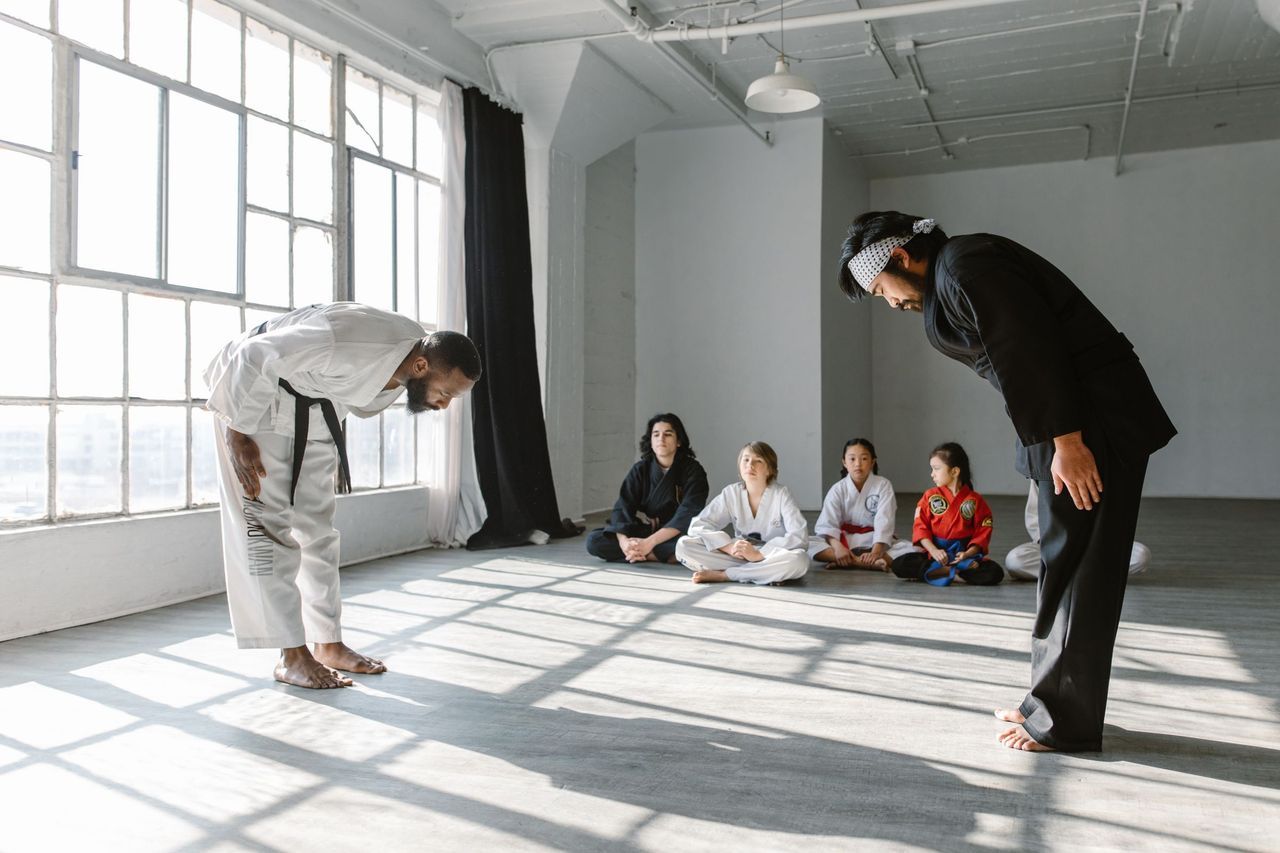
One reason martial arts can retain students for years is that it creates community experiences that go beyond instruction. Belts and stripes are part of it, but so are the shared rituals: lining up, bowing in, partner work, helping a new student, and learning how to struggle without quitting.
We build retention when we create structured chances for connection, such as:
- Workshops that feel like a special training day, not just “more class”
- Ceremonies that celebrate progress without making it all about rank
- Leadership moments for teens, like assisting in beginner classes
- Family events that make the school feel like a community, not a transaction
Those experiences make it easier to stay through life changes. When a student has friends here, skipping class feels like missing something meaningful, not just missing a workout.
Retention metrics that make decisions easier
Culture can feel intangible, so we like using simple metrics to keep ourselves honest. This isn’t about turning people into spreadsheets. It’s about noticing patterns early enough to improve them.
A monthly review can include:
- New-student retention at 30, 60, and 90 days
- Attendance trends by class time and program level
- Common drop-off points, like after an intro program or a belt test
- Reactivations, referrals, and reasons given for leaving
- Staff schedule stability, workload, and turnover signals
When we measure consistently, we can tell whether the issue is onboarding, scheduling, instructor consistency, unclear progression, communication gaps, or something cultural that needs attention.
A simple culture audit you can use this week
If you want to evaluate building a school culture that retains students and staff, we recommend a quick audit based on what people actually experience.
Ask these questions and answer them with real examples, not intentions:
- Do new students get welcomed and introduced within the first class?
- Do students know how progress works and what to do between milestones?
- Do we recognize effort and consistency, not only rank?
- Do instructors have a predictable schedule and clear responsibilities?
- Do we respond to missed attendance with support and options?
- Do parents receive enough communication to understand value and progress?
If any answer feels fuzzy, that’s useful. Fuzzy is where churn hides.
Let the follow-up run without you
Every idea above only pays off when someone answers the lead the moment it comes in and keeps following up until the trial is booked. That is the job More Students Less Work does for you: an AI front desk that replies by text and email from your own answers, follow-up that keeps going, and trial bookings that land on your calendar. Meta ads or a template website are available as options. It is a Ground Standard product, led by Michael Spyrou, for school owners who want the sales system handled without running it themselves.
Book your setup call with Michael and bring your current offer and class schedule. Schools that want everything handled by one agency team go through Ground Standard Agency.
Related reading
- Start with the guide: From Enrollment to Engagement: Crafting a School Culture That Retains All
- The Secret to Building a School Culture That Keeps Students and Staff Engaged
- 7 Essential Steps to Build a School Culture That Retains Talent
- Service: Martial arts school metrics
- All Retention articles
- Ground Standard Agency, for schools that want the full service: How to Create a School Culture Where Students and Staff Thrive
- Source: the U.S. Small Business Administration on hiring and managing employees
More Students Less Work is a Ground Standard product. When a school wants the full agency behind it, Ground Standard Agency is the next step.
Part of the topic Martial Arts School Metrics.



Start your 30‑day free trial.
Experience what the Core Package of the Packed Mats System can do for your school, set up for you.
- The signature automated AI sales system
- Set up and integration
- Access to the platform
- Onboarding and training videos
- No hidden fees